Cross-tenant context
Cross-Tenant Search
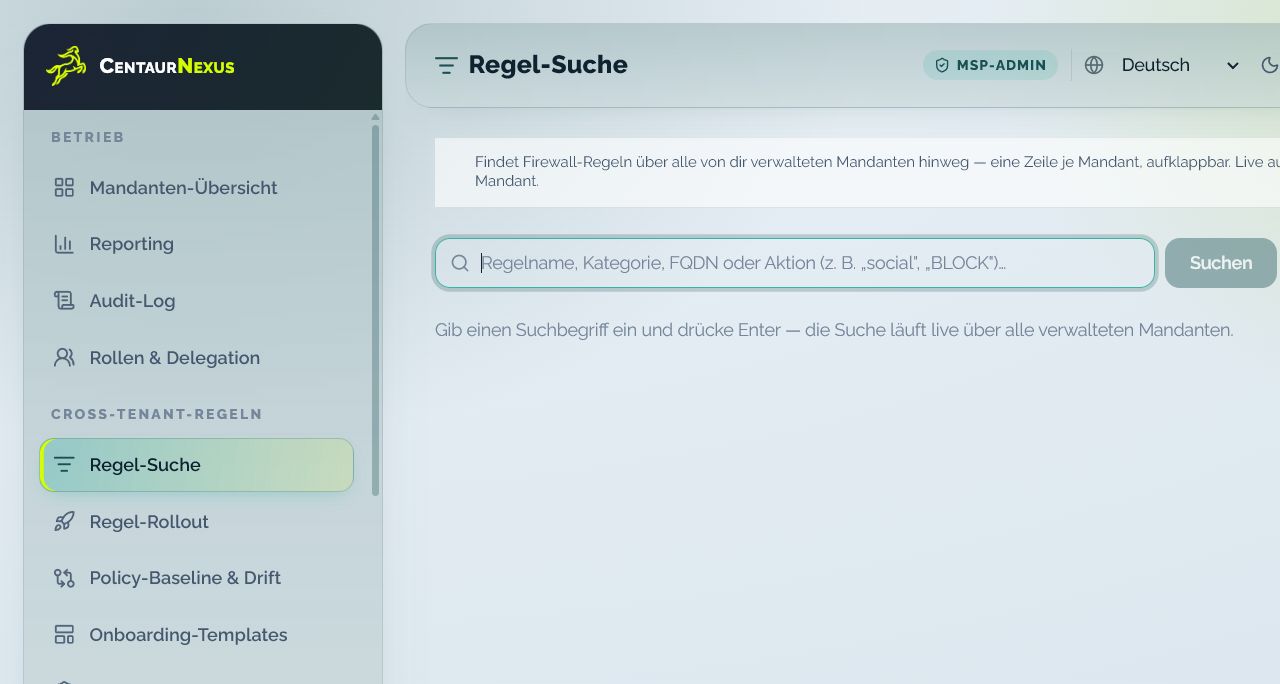
Find user cases and rules across actually managed tenants and return to the right customer context.
Manage multiple Zscaler tenants from one place: authorized cross-tenant search, roles and delegation, and policy baseline and drift bring managed customer environments into a consistent operating view.
Find user cases and rules across actually managed tenants and return to the right customer context.
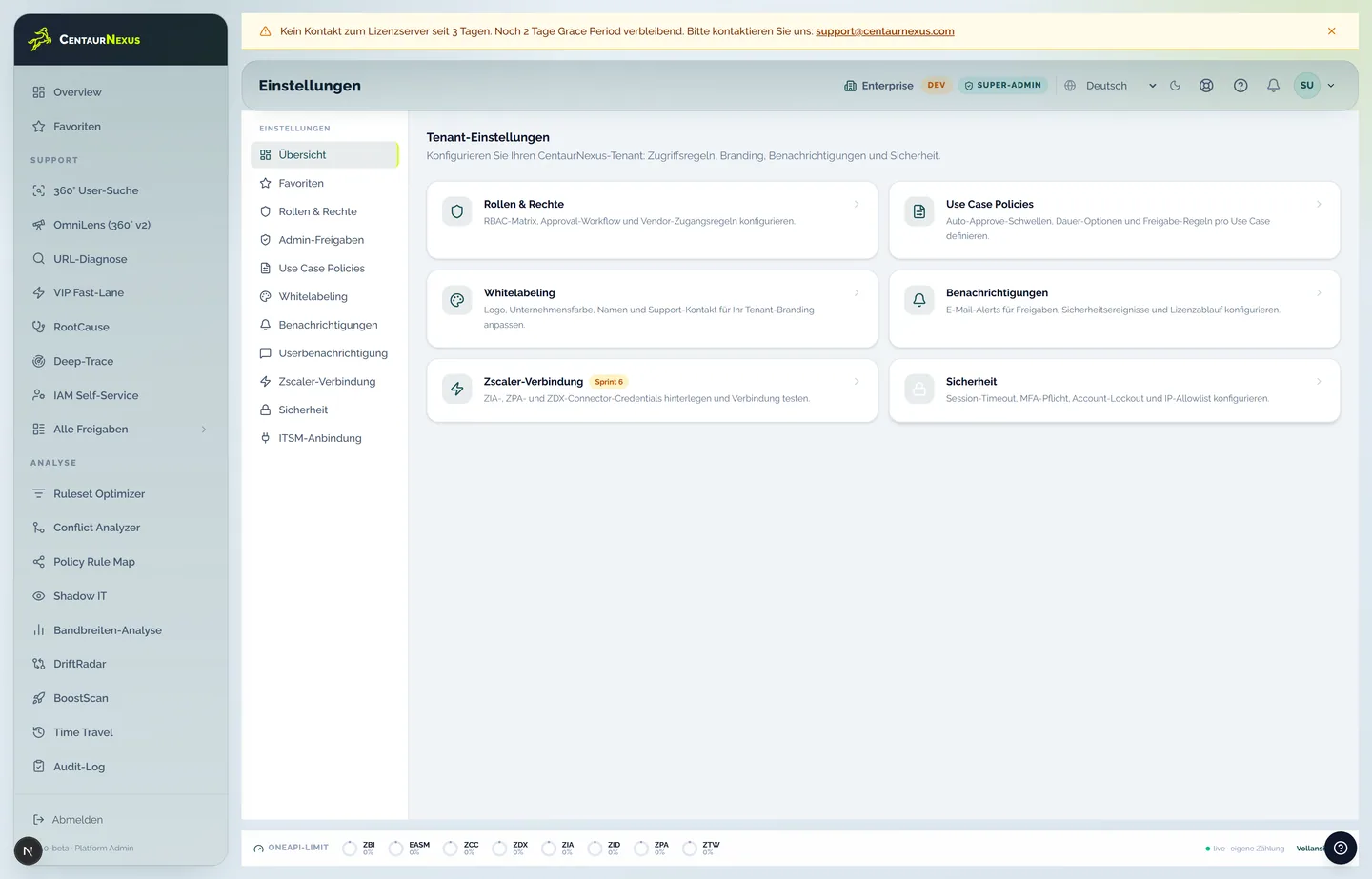
Keep tenant binding, permission and service responsibility transparent for the operator.
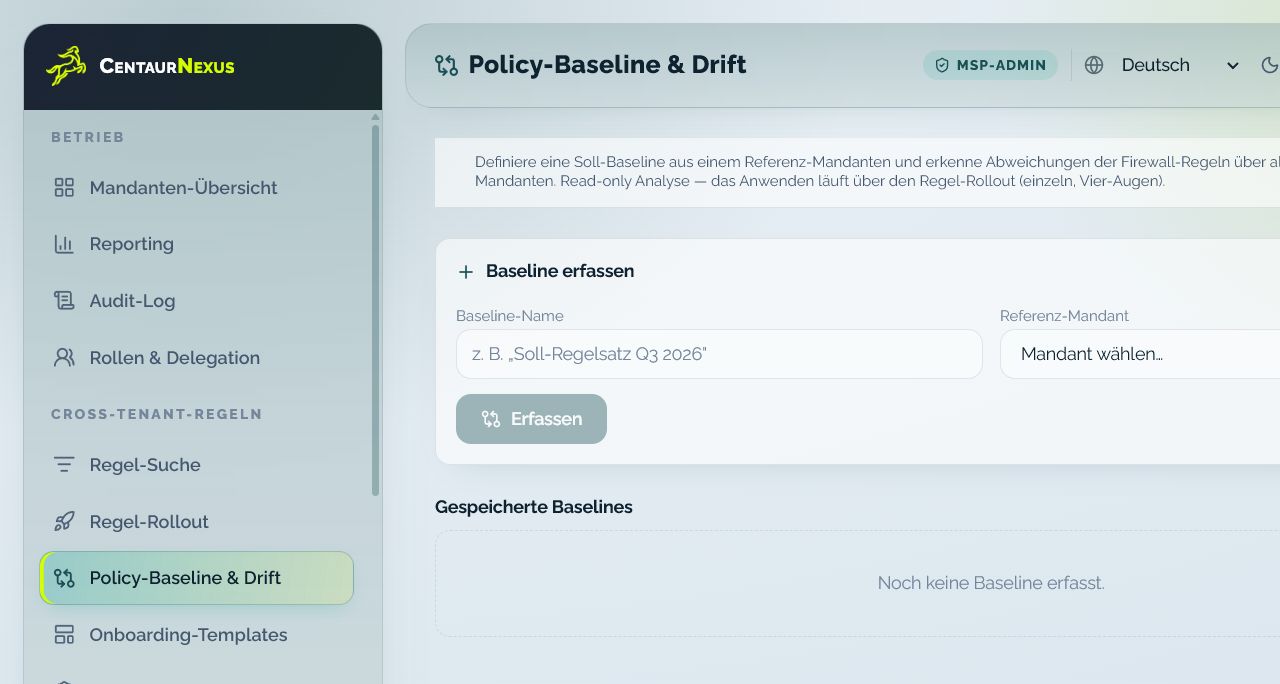
Compare an agreed reference state with customer-specific differences and prepare a conscious review.

Use the same structured user, policy, tunnel and available experience context across customers.
Each case begins in the correct managed tenant, with the appropriate role and a clearly visible customer responsibility.
Apply the same first-line diagnostic method without giving the service desk unnecessary broad rights.
See user, policy, tunnel and available experience details without restarting the information search.
Use cross-tenant context and policy drift as a reviewable service input.
Keep tenant, role, contract context and customer-specific exceptions visible.
CentaurNexus connects technical operations across authorized tenants with an understandable service context.
Start in the correct managed tenant with the appropriate role.
Follow a repeatable diagnosis, approval and handover path that retains tenant context.
Use status, drift and recurring patterns as input for service reviews and priorities.
While a case is being processed, the interface keeps the customer, tenant, acting role and responsibility visible. MSP access remains restricted to the tenants the MSP actually manages.
The platform focuses on repeatable service workflows and explicit customer accountability.
Find user cases and rules across managed tenants.
Assign tenant, permission and responsibility.
Use reference context and customer differences for review.
Move reviewed individual changes into the tenant-specific approval path.

A shared operating model helps teams resolve recurring cases faster while keeping customers and tenants distinct.
Bring one recurring operating situation. We will map the roles, required context and appropriate demo path.
Cross-tenant search, roles and delegation, and policy baseline and drift connect repeatable service workflows with visible customer context.
Yes. User Support Center provides the role-approved first finding. Complex cases can be handed to second level or administration with structured context.
Tenant, role and delegation are part of the operational context. Access remains limited to the tenants the MSP actually manages.
Policy drift, recurring findings and cross-tenant patterns provide reviewable inputs for prioritization and service reviews.